
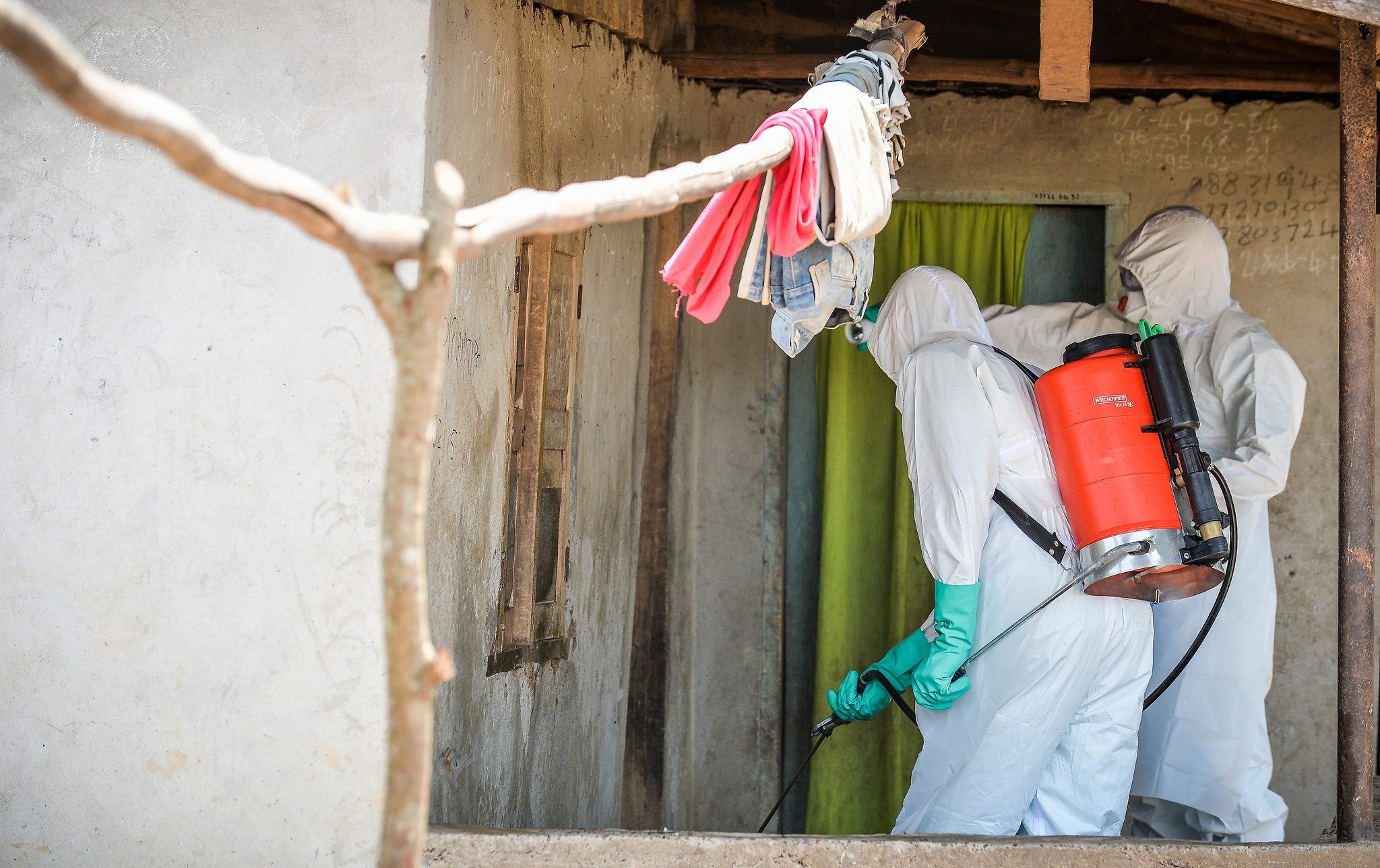
In 2014, the United States launched the Global Health Security Agenda (GHSA) as a 5-year initiative to increase progress toward “a world safe and secure from infectious disease threats.”1 The initial financial commitment was $1 billion. In the years since, important progress has been made. The GHSA has helped to bring political attention to the need to strengthen public health capacities across the globe and has created a mechanism for countries to work collaboratively and make financial commitments to do so.
 However, the work of the GHSA, including motivating and assisting countries to improve their capacities to prevent epidemics like Ebola from reoccurring, is now at a crossroad. Even though senior officials in the Trump administration have voiced support for the GHSA, and at a recent GHSA ministerial meeting in Uganda signed onto the Kampala Declaration to extend the GHSA for at least another 5 years, US funding for the initiative is ending and no commitment for future financial support has been made. Without additional funding, prospects for the next phase of the GHSA will be endangered. It is important for the United States to commit to support the GHSA to help protect the nation and the rest of the world from epidemic disease.
Since its launch, the GHSA has expanded to be a partnership of ministerial-level leaders in 63 countries as well as intergovernmental and nongovernmental organizations that have volunteered to improve national capacities in 11 areas, including counteracting antimicrobial resistance and zoonotic diseases, increasing laboratory and surveillance capacities, improving immunization rates, and strengthening the public health workforce. This work has helped jump-start otherwise stalled progress at implementing the International Health Regulations, an international treaty aimed at improving the capacity of countries to detect and respond to outbreaks that have the potential to spread across national borders. Two years after the initial 2012 deadline, 42 of 195 countries (21%) had met the minimum requirements of the treaty, with 47 (24%) failing to report their status, possibly signaling indifference.2 Even though the International Health Regulations constitute a legal agreement, enforcement is essentially voluntary.
A key success of the GHSA has been to encourage the development of the World Health Organization’s (WHO) International Health Regulations Joint External Evaluation (JEE) tool, a new monitoring and evaluation framework for assessing the capacities of countries to detect and respond to internationally significant outbreaks and other potential public health emergencies. After a WHO-convened independent panel and other outside groups called for assessments of countries’ core public health capacities, the WHO modified the GHSA Assessment tool to create the JEE tool. Using GHSA funding, the United States helped set up and staff the WHO office that oversees the JEE process. Now, on a voluntary basis, approximately 50 countries have either undergone an evaluation or are in the queue to undergo evaluation. Compared with prior indifference to reporting requirements, the WHO now reports that countries generally seem interested in volunteering to undergo an evaluation.3 The GHSA has also broadened planning for health security threats to include natural, unintentional, and deliberate spread of infectious agents. The GHSA has invited ministries of defense, law enforcement, agriculture, and environment into the GHSA process.
US leadership has been essential for the success of the GHSA. High-level US political support has been instrumental in involving the participation of some countries and securing commitments toward work on filling gaps identified in the JEEs. The United States also has a key role in supporting GHSA Ministerial and Steering Group meetings, which help reinforce the partnership between member nations.
Half of the initial $1 billion to fund the GHSA was designated for African nations. With GHSA funding, the United States provides direct financial support and technical assistance to 17 countries in Africa, South Asia, and Southeast Asia and technical assistance to 14 countries all over the globe. For example, GHSA funding enabled the United States to train epidemiologists and veterinary professionals in Kenya to rapidly detect and contain an anthrax outbreak and to equip public health laboratories to be able to test for more than 50 potentially deadly pathogens.4 In Sierra Leone, GHSA-funds enabled the identification of 4000 previously undetected cases of measles, which led to the vaccination of more than 2.8 million children.5 US efforts in Uganda helped strengthen laboratory capacity, build an emergency operations center, and train field epidemiologists.4 Following these efforts, Uganda was able to confirm an outbreak of yellow fever in 3 days vs 40 days for an outbreak in 2010. Laboratory safety for dangerous pathogens has been strengthened in another 7 countries.
In addition to directly supporting capacity building efforts like these, US financial contributions have been instrumental in other countries offering financial support for the GHSA. Following US commitments, other G-7 nations have pledged contributions to improve public health capacities in more than 60 countries.6
For example, South Korea has pledged to spend $100 million to build capacities in 13 countries. Japan and Australia have pledged $40 million and $100 million, respectively.
To date, the United States has largely supported its GHSA work with emergency funds allocated during the 2014 Ebola epidemic. But because that funding ends in 2019, new sources of funding will be required. At a minimum, an estimated $100 milion to $200 million per year is needed to continue the work the United States is doing to strengthen public health capacities in countries not yet prepared to cope with epidemic diseases. Without new funding sources, the United States will have to use remaining GHSA-related funds to begin the expensive work of shutting down its overseas programs, including recalling US personnel who have been working overseas and terminating employment of local administrative staff who facilitate US work in other countries. Closing operations will lead to an estimated loss in 80% of field-based overseas staff, which will effectively end current efforts to strengthen capacities abroad and greatly reduce US monitoring capabilities that enable early detection of diseases that could signal the beginning of an outbreak or epidemic.
As the GHSA enters its second phase, countries will look for signs of continued US support. Failing to allocate additional GHSA funding would send a negative signal to international partners which may erode the initiative’s political capital and diminish other countries’ commitments. Tempering international will would reverse momentum of the first few years of GHSA.
US leadership in global health security via the GHSA is not merely important for preserving international commitment. It is also, as US Secretary of State Tillerson recently said, vital to US national security interests.7 If vulnerable countries do not have the capacity to quickly cope with disease outbreaks, those outbreaks are more likely to spread internationally, including to the United States. The GHSA is a powerful tool for helping to ensure that global gaps in health security are addressed before disease outbreaks occur. It is an international effort worthy of continued US investment and support.