

Abstract
Bacillus anthracis and Yersinia pestis are zoonotic bacteria capable of causing severe and sometimes fatal infections in animals and humans. Although considered as diseases of antiquity in industrialized countries due to animal and public health improvements, they remain endemic in vast regions of the world disproportionally affecting the poor. These pathogens also remain a serious threat if deployed in biological warfare. A single vaccine capable of stimulating rapid protection against both pathogens would be an extremely advantageous public health tool. We produced multiple-antigen fusion proteins (MaF1 and MaF2) containing protective regions from B. anthracis protective antigen (PA) and lethal factor (LF), and from Y. pestis V antigen (LcrV) and fraction 1 (F1) capsule. The MaF2 sequence was also expressed from a plasmid construct (pDNA-MaF2). Immunogenicity and protective efficacy were investigated in mice following homologous and heterologous prime-boost immunization. Antibody responses were determined by ELISA and anthrax toxin neutralization assay. Vaccine efficacy was determined against lethal challenge with either anthrax toxin or Y. pestis. Both constructs elicited LcrV and LF-specific serum IgG, and MaF2 elicited toxin-neutralizing antibodies. Immunizations with MaF2 conferred 100% and 88% protection against Y. pestis and anthrax toxin, respectively. In contrast, pDNA-MaF2 conferred only 63% protection against Y. pestisand no protection against anthrax toxin challenge. pDNA-MaF2-prime MaF2-boost induced 75% protection against Y. pestis and 25% protection against anthrax toxin. Protection was increased by the molecular adjuvant CARDif. In conclusion, MaF2 is a promising multi-antigen vaccine candidate against anthrax and plague that warrants further investigation.
Author summary
Anthrax and plague are ancient infectious diseases that continue to affect people living in poor, endemic regions and to threaten industrialized nations due to their potential use in biowarfare. Candidate vaccines need improvement to minimize non-desirable effects and increase their efficacy. The purpose of this work was to develop and evaluate a single subunit vaccine capable of conferring protection against Bacillus anthracis and Yersinia pestis. To this end, specific regions from their genome or key protective protein sequences from both microorganisms were combined to obtain either recombinant plasmids or recombinant proteins and tested as vaccine candidates in mice. The recombinant protein MaF2 induced specific antibody responses and afforded full and partial protection against Y. pestis and B. anthracis, respectively. Meanwhile, the DNA vaccine equivalent to MaF2 conferred only partial protection against Y. pestis, which increased when combined with an MaF2 protein boost. MaF2 emerged as a promising dual pathogen recombinant vaccine that warrants further investigation.
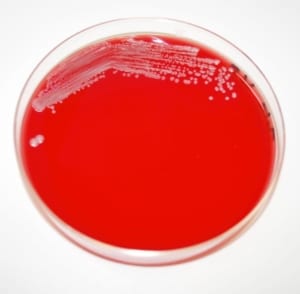
Credit: CDC
Read more at PLOS…
Citation: Gallagher TB, Mellado-Sanchez G, Jorgensen AL, Moore S, Nataro JP, Pasetti MF, et al. (2019) Development of a multiple-antigen protein fusion vaccine candidate that confers
protection against Bacillus anthracis and Yersinia pestis. PLoS Negl Trop Dis 13(8): e0007644. https://doi.org/10.1371/journal.pntd.0007644
The post Development of a multiple-antigen protein fusion vaccine candidate that confers protection against Bacillus anthracis and Yersinia pestis appeared first on Healthier Environment Living Program.