
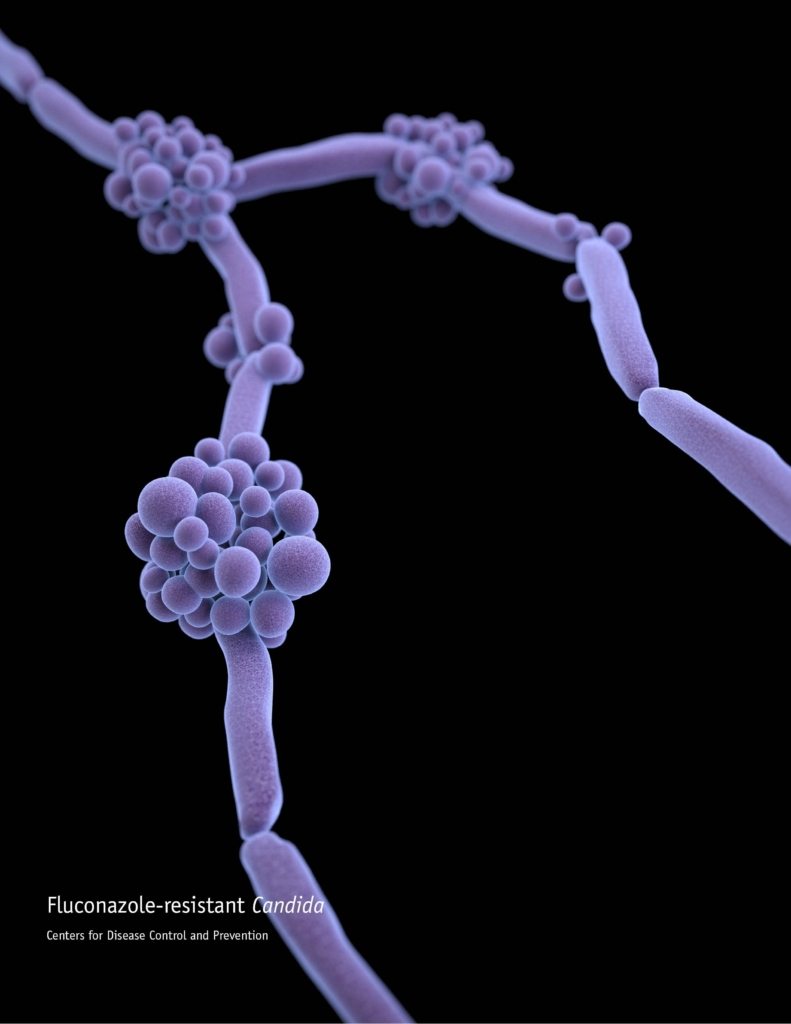
ABSTRACT Candida species are one of the leading causes of nosocomial infections. Because much of the treatment for Candida infections is empirical, some institutions do not identify Candida to species level. With the worldwide emergence of the multidrug-resistant species Candida auris, identification of Candida to species level has new clinical relevance. Species should be identified for invasive candidiasis isolates, and species-level identification can be considered for selected noninvasive isolates to improve detection of C. auris.
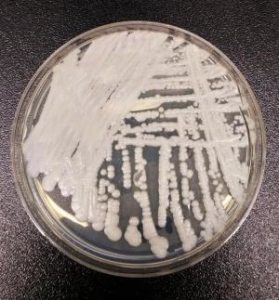 The genus Candida encompasses an array of more than 400 asexual yeasts, many of which are only distantly related. A small proportion of Candida species cause
invasive infection in humans. In the United States, Candida species are among the most common organisms causing health care-associated bloodstream infections (BSIs), and all-cause mortality is 20 to 40% (1–3). The species Candida albicans causes a substantial portion of invasive infections, but non-albicans species have become increasingly common. Non-albicans species have been associated with higher mortality and greater antifungal drug resistance than those seen with C. albicans infections (4, 5).
The distant
phylogenetic relationship between some species, even among pathogenic species,
helps explain some of their various characteristics, including degree of pathogenicity and antifungal resistance. It is important to know the species of Candida causing infection because each species has specific antifungal drug susceptibility patterns that can inform treatment decisions. However, many laboratories in the United States do not automatically perform species identification, even for invasive Candida infections,
unless specifically requested by a clinician. Invasive Candida infections are commonly treated without species confirmation. This practice is similar to treating a Gram-negative bacterial infection without knowing whether the causative bacterium
is Escherichia coli, Pseudomonas aeruginosa, or a rare pathogen. The Infectious Disease Society of America (IDSA) treatment guidelines on management of invasive candidiasis recommend that antifungal susceptibility testing be performed on all Candida isolates from sterile body sites (6). Implicit, but not specified, in this guidance is that Candida needs to be identified to the species level because interpretation of MICs performed for susceptibility testing depends on the species. For
example, an MIC of 8 is considered susceptible dose dependent for Candida glabrata, but the same MIC is considered resistant for C. albicans. Species identification can usually be obtained at least 48 h before susceptibility testing results are available.